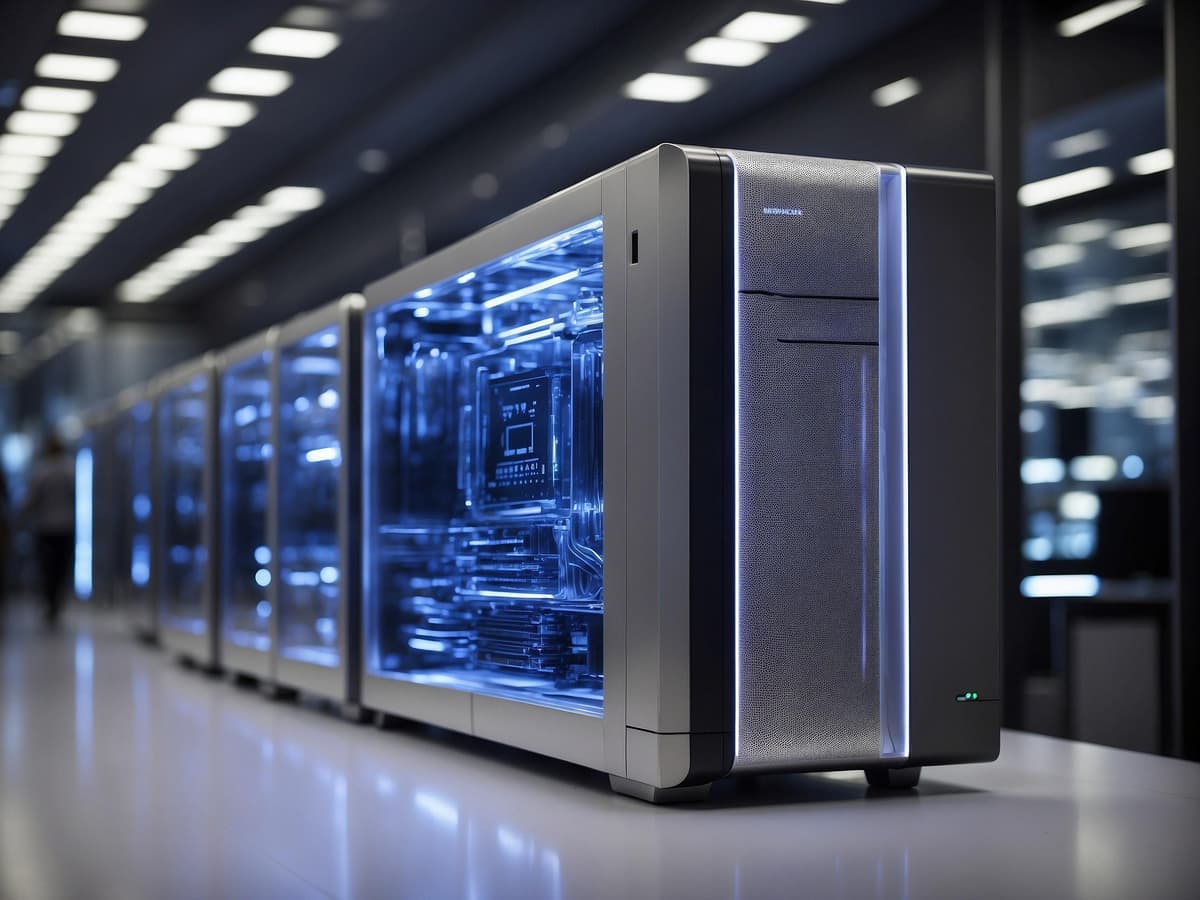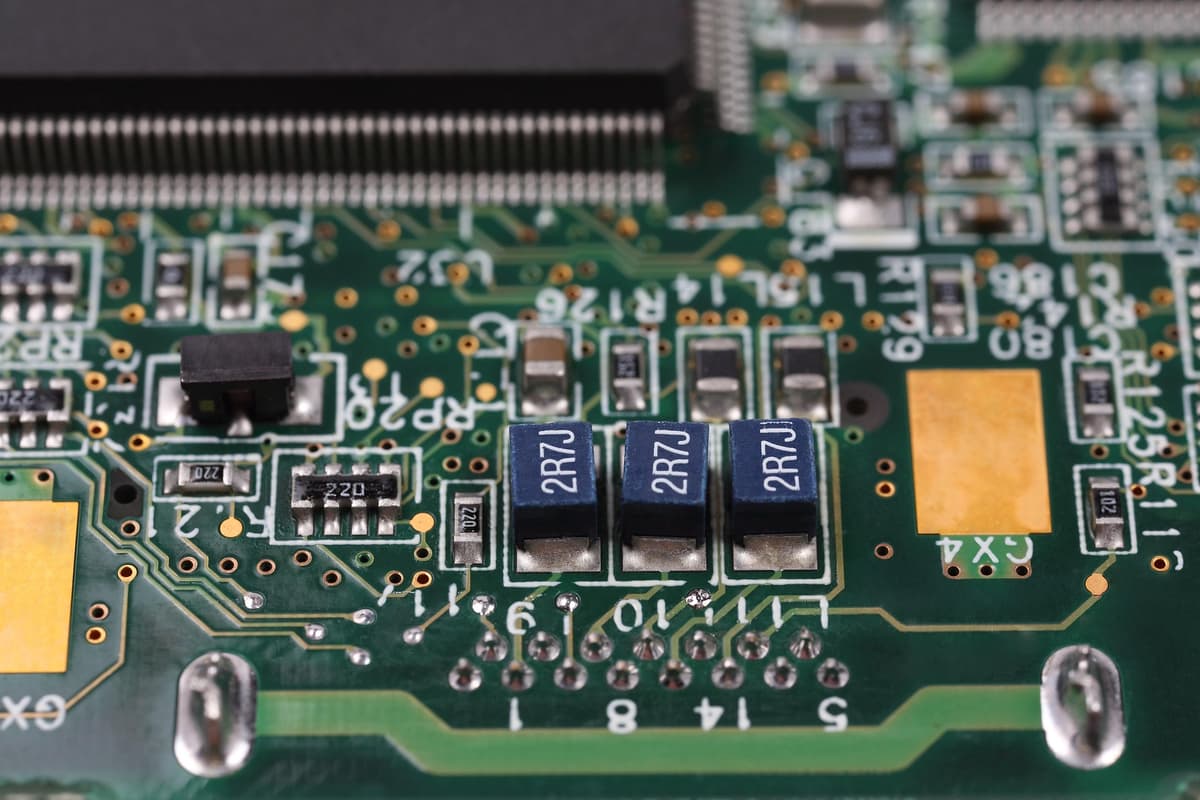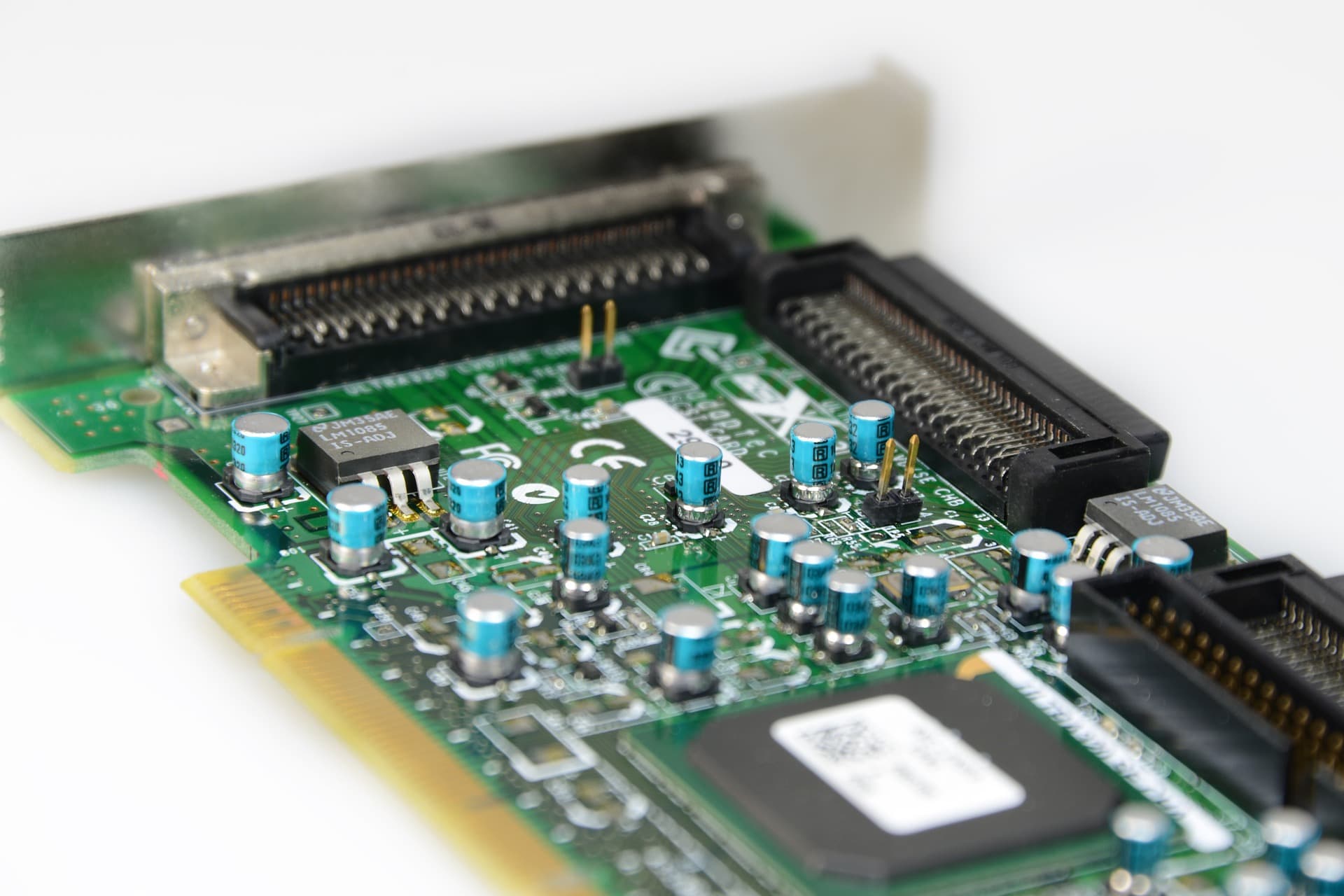
Astera Labs Inc. (ALAB) is a pure-play on one of the most important and least understood bottlenecks in AI infrastructure: the connectivity layer between compute, memory, and storage within high-density AI clusters. While public market attention focuses on GPUs and cloud platforms, the practical constraint governing GPU utilization efficiency is increasingly bandwidth — specifically, how fast data can move between CPUs, GPUs, and memory within a server rack. Astera designs purpose-built semiconductor connectivity solutions — CXL memory controllers, PCIe/CXL retimers, and high-speed interconnects — that address this bandwidth gap, enabling AI clusters to sustain higher effective throughput by eliminating the interconnect bottlenecks that would otherwise constrain GPU utilization.
The AI cluster architecture problem that Astera solves is a physical one. As GPU compute performance has scaled rapidly with each generation, the bandwidth required to keep those GPUs fed with data has scaled even faster. A GPU that can perform a quadrillion floating-point operations per second is only useful if the data it needs arrives fast enough to keep it occupied. The standard PCIe interconnect infrastructure designed for conventional server workloads is not built for the sustained, high-bandwidth access patterns of large-scale AI training and inference — creating what is effectively a superhighway of compute connected to a two-lane road of data access. Astera's CXL memory controllers and PCIe retimers widen that road, and its integrated smart cable modules enable high-bandwidth optical connections between servers within the cluster.
GZC tracks ALAB as a BTT Framework holding for a specific reason: the addressable market for AI cluster connectivity solutions is a structural function of AI infrastructure deployment, not a discretionary feature budget. Hyperscalers optimizing GPU utilization have economic motivation to invest in connectivity solutions that improve effective GPU performance — because the incremental revenue from each percentage point improvement in GPU utilization, across thousands of GPUs, far exceeds the connectivity component cost. This is forced spend in the economic sense: the return on investment of better connectivity is so clear that rationally managed AI infrastructure buyers must invest in it.
Key Metrics Snapshot
| Field | Detail |
|---|---|
| Ticker | ALAB |
| Sector | Technology / Data Center Connectivity & Infrastructure |
| Theme | AI Data-Center Interconnects, CXL Memory, High-Speed PCIe |
| Investment Bias | Bullish |
| Time Horizon | 12–36 months |
| Target Range | $300–$340 |
Green Zone Capital Thesis
Astera Labs fits inside GZC's Technology Pool as a high-conviction enabler of AI infrastructure — focused not on the compute itself but on the I/O and memory layer where congestion currently limits effective AI throughput. The distinction matters: Astera is not in the crowded GPU or networking switch market. It is in the connectivity substrate layer — the specialized silicon that determines how efficiently the GPU, CPU, and memory hierarchy communicates within a rack.
GZC views ALAB as three things simultaneously:
A capacity unlock story for AI data centers. Hyperscalers and cloud operators are spending hundreds of billions of dollars on GPU clusters. The marginal cost of improving GPU utilization through better connectivity is a small fraction of the total cluster cost, but the performance benefit is substantial. Astera's solutions enable operators to extract more useful compute from each GPU they deploy — a value proposition with clear, calculable ROI.
A multi-cloud design win opportunity. Astera's products are qualified across multiple major cloud providers and server OEMs — reducing the single-customer concentration risk that afflicts many AI semiconductor companies and creating a revenue base that is distributed across the hyperscaler landscape rather than dependent on any single procurement decision.
A long runway name at an early stage of market development. CXL as an interface standard is still in early commercial deployment. As CXL adoption expands from early adopters to broad infrastructure deployment, Astera's addressable market grows — not from winning more share in an existing market, but from the market itself expanding as the standard becomes ubiquitous. GZC views this adoption curve as a 3–7 year expansion opportunity, not a one-cycle product story.
Fundamental Analysis | Bull Case
AI data center capex from major hyperscalers continues to prioritize GPU utilization optimization. As each successive generation of AI cluster is deployed at higher GPU density and higher per-GPU performance, the bandwidth requirements of the interconnect layer increase proportionally. Astera's revenue grows with the density and performance of the clusters being deployed — not just with the number of clusters.
CXL and PCIe leadership creates early-mover advantages in a fast-growing, under-penetrated market segment. Controller and retimer design is complex silicon work requiring deep knowledge of interface standards, signal integrity, and the specific workload patterns of AI infrastructure. Astera has invested years developing this expertise and building the customer relationships required for qualification. New entrants face the same multi-year qualification cycle that Astera has already completed with major hyperscalers.
The fabless model provides attractive capital efficiency. Astera designs the chips and outsources manufacturing to leading foundries — enabling revenue scaling primarily through R&D investment and go-to-market execution rather than capital-intensive manufacturing build-out. As the AI connectivity market expands, Astera scales revenue without proportional capital investment — creating significant operating leverage on the path to scale.
Technical Analysis | Market Structure
Since its IPO, ALAB has exhibited classic high-growth public market behavior: an initial post-IPO expansion as investors priced the structural opportunity, followed by a consolidation and reset as early buyers took profits, and then a re-accumulation phase as the fundamental story demonstrated consistency across multiple quarters. The current higher-low formation above $140 represents this re-accumulation — institutional buyers establishing positions at structurally supported levels before the next expansion phase.
The key technical levels reflect the market's assessment of the fundamental story's credibility:
| Level | Zone |
|---|---|
| Support | Mid-$130s to low-$150s |
| Continuation Signal | Sustained closes above $160–$170 |
| Channel Extension | $260–$300 over 12–24 months |
The channel extension toward $260–$300 reflects the revenue and earnings trajectory visible in the design win pipeline and the CXL adoption ramp. GZC treats the $130 level as the structural risk level — a sustained break below it would suggest the market is questioning the fundamental thesis rather than simply digesting prior gains.
Investment Strategy
| Accumulate | $150–$160 on controlled pullbacks |
| Add | Decisive breakout above $160 with strong volume |
| Initial Trim | $250–$260 |
| Secondary Target | $260–$340 |
| Reassess | Sustained break below $130 (loss of channel support) |
Summary
Astera Labs represents GZC's highest-conviction high-beta idea in the AI infrastructure connectivity stack. The connectivity bottleneck is structural — it is a direct physical consequence of GPU density growth outpacing conventional interconnect bandwidth — and solving it has clear, calculable ROI for every large-scale AI cluster operator. Astera's design wins, early-mover advantages in CXL, and fabless capital efficiency create a business that can scale disproportionately as the AI infrastructure buildout deepens.
GZC maintains a bullish multi-year outlook, treating position sizing and risk management as critical given the early-stage public market profile. The asymmetric upside from CXL adoption becoming infrastructure-standard — across hyperscalers, enterprise data centers, and eventually edge AI facilities — represents the kind of structural market expansion that creates the highest long-term returns in semiconductor infrastructure.
This publication is for informational and educational purposes only and does not constitute investment advice, an offer to sell, or a solicitation to buy any securities. All opinions reflect the current views of Green Zone Capital and are subject to change without notice. Past performance is not indicative of future results. Investing involves risk, including possible loss of principal. For additional information or official materials, please visit greenzonecapital.com or contact info@greenzonecapital.com.