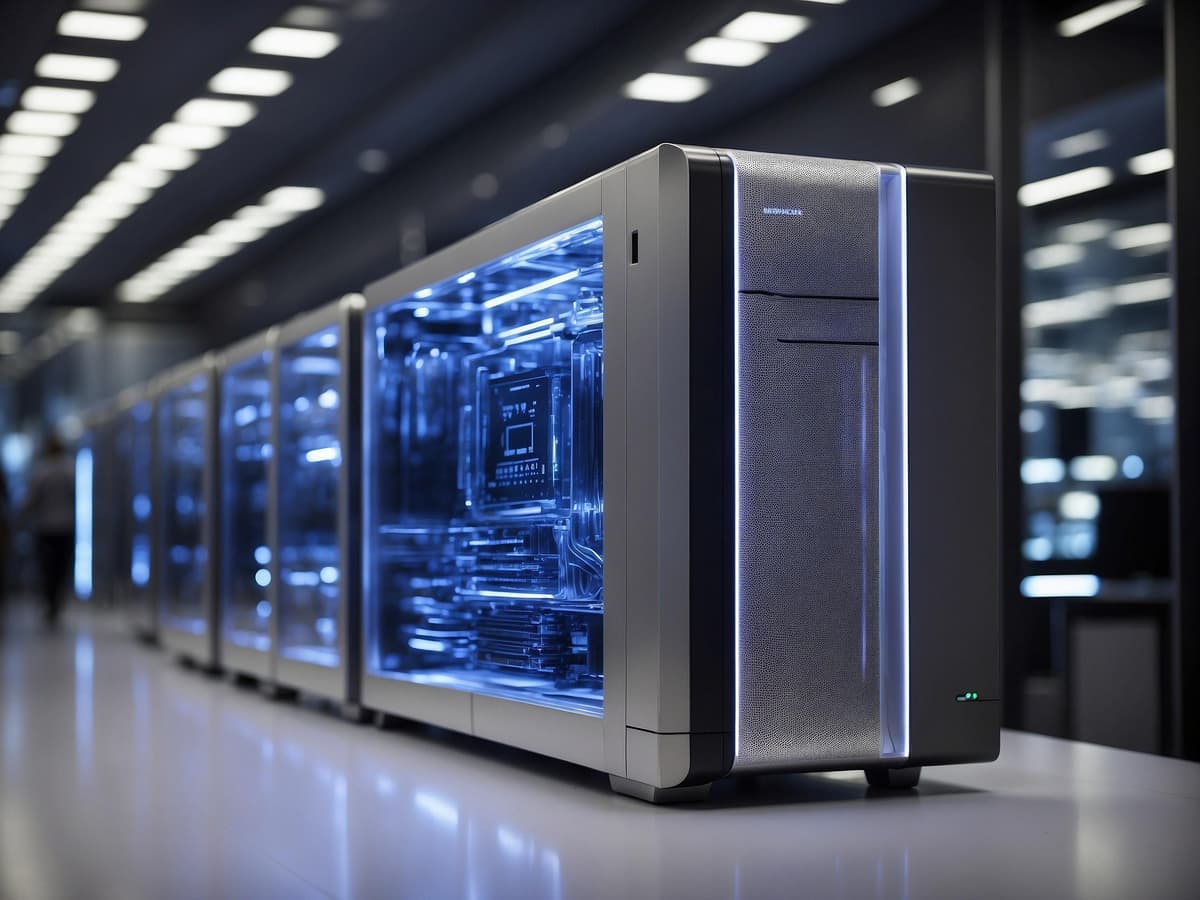
Applied Digital is one of the more direct public-market ways to express the idea that AI infrastructure demand is ultimately constrained by real-world buildout capacity. Green Zone Capital views the company through a Bottleneck-to-Ticker lens: if hyperscalers, model builders, and enterprise customers need large-scale AI deployment, then someone has to secure land, power, cooling, and operational data-center capacity fast enough to meet that demand. Applied Digital sits directly in that layer.
Applied Digital designs, builds, and operates digital infrastructure and cloud services for high-performance computing and AI workloads — aligned closely with the must-build side of the AI infrastructure thesis.
Key Metrics Snapshot
| Field | Detail |
|---|---|
| Ticker | APLD |
| Sector | Digital Infrastructure / AI Data Centers |
| Theme | AI Factory Capacity, Powered Land, High-Density Cooling |
| Investment Bias | Bullish, but higher-risk / execution-sensitive |
| Time Horizon | 12–36 months |
Green Zone Capital Thesis
For Applied Digital, GZC's thesis rests on three pillars:
- AI requires power-ready physical infrastructure, not just chips. Applied Digital is building and operating high-performance data-center capacity — not simply selling a component into the stack.
- Speed of delivery matters. Polaris Forge 1's first 100 MW building is fully operational, and Applied Digital has broken ground on Delta Forge 1, a 430 MW campus with up to 300 MW of critical IT load.
- Demand appears real, not hypothetical. Applied Digital reported fiscal Q3 2026 revenue of $126.6M and adjusted EBITDA of $44.1M, with $71.0M of revenue from its HPC Hosting business during the quarter.
Fundamental Analysis | Bull Case
Applied Digital remains early enough in the AI infrastructure cycle to still be misunderstood by the market, yet far enough along operationally to show that the model is turning into real revenue. Management highlighted that the first 100 MW facility at Polaris Forge 1 is fully operational, the next two 150 MW facilities are advancing, and Polaris Forge 2 is progressing as a 200 MW investment-grade hyperscaler campus.
The company is actively marketing four development sites totaling roughly 1 GW of grid power capacity, subject to approvals. It also reiterated a long-term goal of exceeding $1 billion of NOI within five years.
Technical Analysis | Market Structure
The chart looks like a classic re-accumulation structure after a major upside move. The key zone appears to be around $24–$26, where former resistance is now trying to act as support. If that area continues to hold, the setup favors continuation rather than failure.
APLD does not need to be treated like a mature low-volatility compounder — it should be treated like a volatile infrastructure builder in a strong thematic regime.
Investment Strategy
| Key Support | $24–$26 (former resistance now acting as support) |
| Constructive Zone | Low-$30s while stock remains above support shelf |
| Focus | Capacity delivery, hyperscaler leasing, buildout execution |
| Reassess | Sustained weekly breakdown below support |
Summary
Applied Digital fits GZC's framework because it sits unusually close to one of the hardest bottlenecks in the AI cycle: turning infrastructure plans into live, revenue-producing capacity. The company is still earlier-stage and more execution-sensitive than the largest incumbents, but that is also why it remains interesting. If the current support zone continues to hold and project delivery remains on schedule, APLD has room to re-rate further.
This publication is for informational and educational purposes only and does not constitute investment advice, an offer to sell, or a solicitation to buy any securities. All opinions reflect the current views of Green Zone Capital and are subject to change without notice. Past performance is not indicative of future results. Investing involves risk, including possible loss of principal. For additional information or official materials, please visit greenzonecapital.com or contact info@greenzonecapital.com.