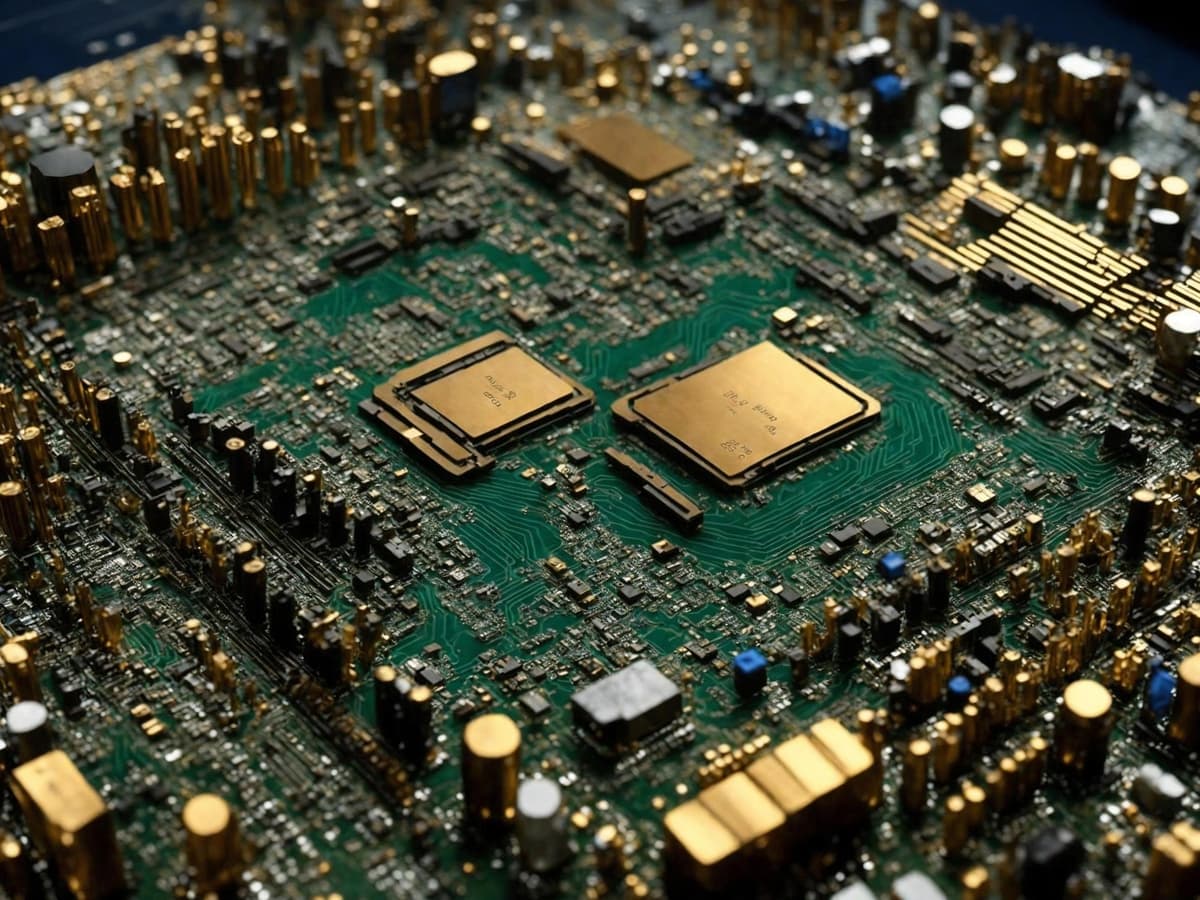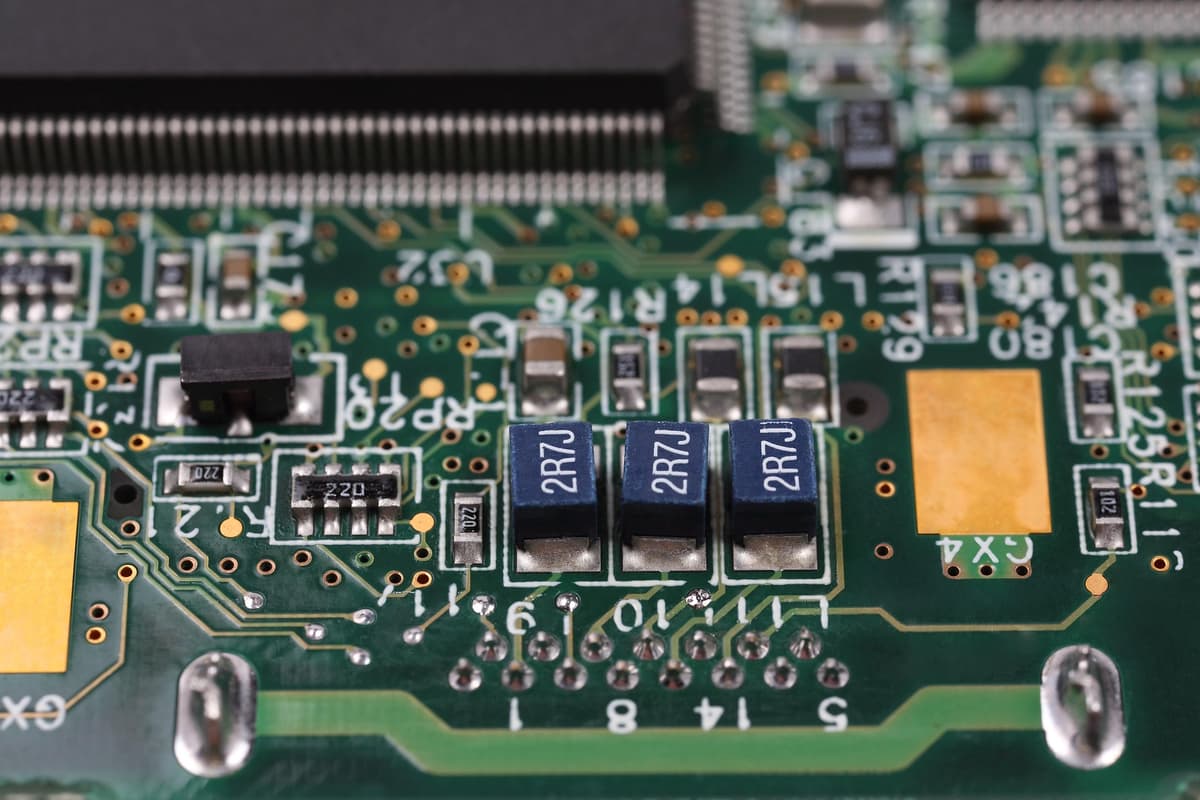
Most market commentary stops at GPUs. In reality, AI capacity compounds through a chain of constraints: chips create bandwidth pressure on switching, which raises thermal and power requirements, which finally pulls fuel and generation into scope.
At the same time, secular demand for compute is set to grow at an unprecedented pace across multiple industries. Since 2019, GZC's edge has been owning the right link in the constraint chain at the right time.
The Capacity Constraint Chain
Each breakthrough in compute creates a new constraint further down the stack. Understanding where bottlenecks migrate — and who profits from solving them — is how GZC stays ahead of the next cycle.
Chips → Networks → Cooling → Energy
Stage I: Chip Compute Training clusters exploded first. GPUs and CPUs took center stage as enterprises and hyperscalers armed up for model training and, now, inference at scale.
Stage II: Data Networks The second stage is about moving bits inside and between clusters — 400/800G Ethernet now, with 1.6T on the horizon. As network throughput rises, fabric design, telemetry, and lossless performance become the real unlocks.
Stage III: Power Cooling Rising network throughput drives rack density. Density revives thermal and power engineering as boardroom topics: liquid and hybrid cooling, high-capacity power distribution, UPS topologies, and continuous monitoring.
Stage IV: Energy Fuel Double-digit gigawatts of incremental load require new procurement strategies — PPAs, on-site generation, and in select jurisdictions SMR pilots. Grid interconnect timing becomes a gating item for site infrastructure scale.
Structural Compute Expansion
The demand for compute is not a trend — it is a structural transformation reshaping nearly every industry:
- Multi-Industry AI: From finance and healthcare to manufacturing and logistics, AI workloads migrate from pilot demos to production
- Cloud Edge Expansion: Global cloud capacity scales while edge nodes proliferate to process data closer to source
- Simulation Workloads: Climate models, drug discovery, robotics, and AR/VR all require high-performance compute
- IoT Automation: Billions of sensors, autonomous systems, and factory lines throw off continuous data streams
This is not a hype loop — it is an industrial build-out. GZC expects no reversion to pre-AI demand levels.
Short-term Outlook
Compute: The conversation shifts from "who sells the most GPUs" to who monetizes inference and delivers performance per watt. GZC is selective and price-disciplined — adding on dislocations, not chasing verticals.
Networking: 800G becomes the default for new fabrics with early 1.6T evaluations at hyperscale. GZC favors vendors with software-defined control planes, predictable roadmaps, and cloud network trust.
Thermal & Power: The durable profit pool in a density race. Expect a mix of retrofits and greenfield builds designed for high-density racks from day one.
Fuel & Inputs: The bottleneck no one can ignore. Uranium tightness, rare-earth supply chains, and SMR leaders sit at the frontier.
Mid-term Outlook (2030)
Capital expenditures from cloud providers, co-location operators, and governments remain a tailwind. National strategies to onshore fabrication, secure energy, and expand grid capacity reinforce the cycle. Digestion quarters will happen — historically, they have been chances to upgrade quality within the stack.
Long-term Outlook (2035)
Compute power becomes a strategic input parallel to industrial baseload. Regions that solve for power and interconnect first will pull forward chip fabs, AI sites, and the jobs that follow. The beneficiaries won't be a single ticker or a single layer — they will be the businesses that remove whatever constraint is next in line.
GZC Strategy & Risk Management
GZC treats the constraint stack as linked exposures rather than isolated bets: Compute leaders → Networking → Thermal power specialists → Energy minerals and nuclear optionality.
- Adds: Price reclaims key weekly levels and fundamental flows improve
- Trims: Harvest vertical extensions, recycle into lagging but improving links
- Sizing: Concentration where moats and cadence are strongest; smaller, staged sizing in cyclicals and frontier energy
Summary
The next decade of returns won't belong to a single hero stock or headline sector. They will accrue to investors who understand how constraints migrate — chips to cooling, power to policy — and who position a step ahead of that flow. GZC's focus is to own the critical points along that route: the networks, grid gear, compute infrastructure, and enabling technologies that keep the digital economy powered.
This publication is for informational and educational purposes only and does not constitute investment advice, an offer to sell, or a solicitation to buy any securities. All opinions reflect the current views of Green Zone Capital and are subject to change without notice. Past performance is not indicative of future results. Investing involves risk, including possible loss of principal. For additional information or official materials, please visit greenzonecapital.com or contact info@greenzonecapital.com.