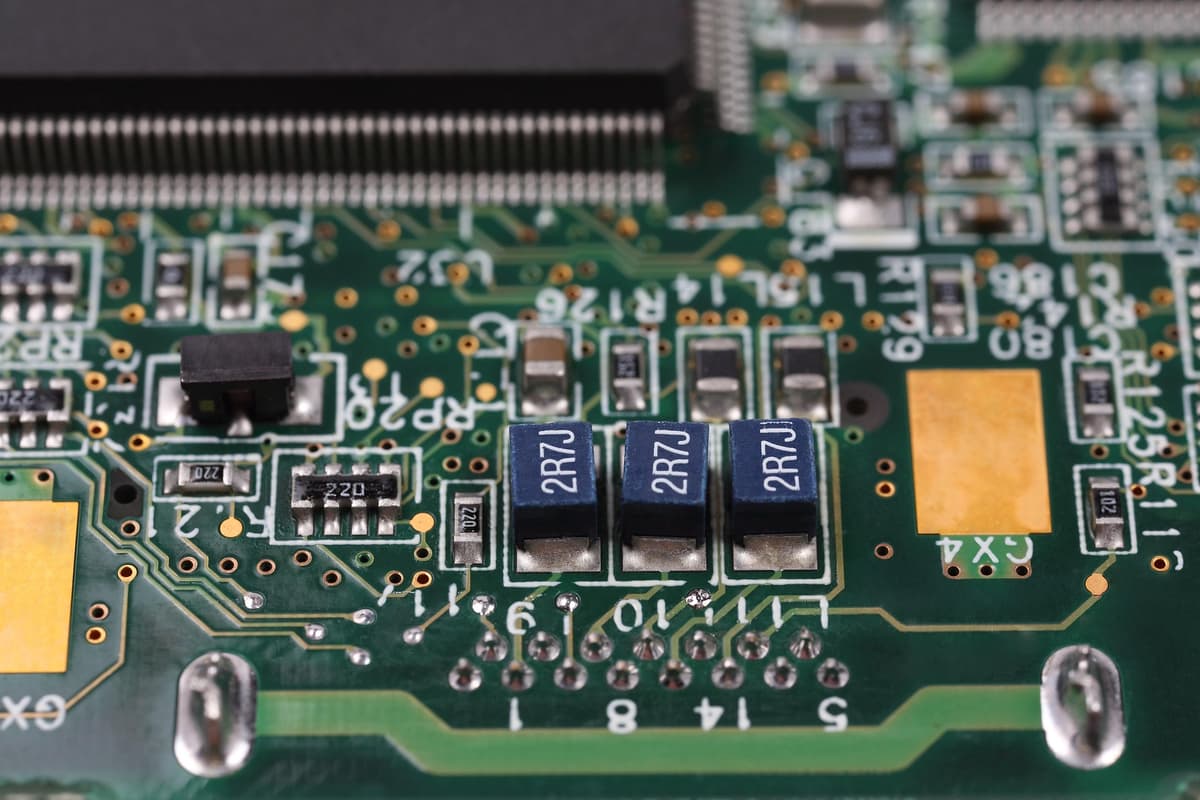
Silicon Motion Technology Corporation is a picks-and-shovels semiconductor name inside the data flow layer of the AI economy. While most market attention concentrates on GPU compute, model benchmarks, and hyperscaler capex announcements, the practical constraint governing real-world AI deployment is increasingly throughput — how fast data can be written, stored, retrieved, and moved across devices and systems at every tier of the stack. That throughput problem is not solved by compute alone. It is solved by NAND flash storage, and NAND storage performance is governed by controllers. Silicon Motion designs those controllers, and its market position in the layer that determines NAND performance makes it a structural beneficiary of AI's expansion beyond the data center.
The company's product portfolio spans three principal segments: client SSD controllers for personal computers and AI PCs, embedded storage controllers (eMMC and UFS) for smartphones and IoT devices, and an expanding range of solutions for automotive and enterprise applications. What unifies these segments is the structural tailwind GZC identifies: AI is not just a compute problem. Every AI workflow — whether it is model training in a hyperscale data center, inference on an AI PC, or real-time processing in a connected vehicle — generates data that must be stored, retrieved, and moved. As AI workloads become more pervasive and more demanding, the storage controller layer that governs these operations becomes more critical, and Silicon Motion's design wins and technology leadership translate directly into revenue.
Q4 2025 results validated the structural thesis with the specificity GZC looks for when maintaining conviction in a position. Net sales of $278.5 million were up 15% quarter-over-quarter and 46% year-over-year — an acceleration that reflects genuine demand rather than inventory restocking. Client SSD controller sales rose 25–30% sequentially, driven by AI PC traction and demand from white-box AI server builders for cost-efficient NVMe storage. The eMMC and UFS segment showed sequential stability while automotive and diversified storage solutions continued their gradual growth trajectory. These are not the financial characteristics of a company riding a temporary NAND inventory cycle — they are the characteristics of a company capturing structural demand growth as AI expands the storage requirements of devices at every tier.
Key Metrics Snapshot
| Field | Detail |
|---|---|
| Ticker | SIMO |
| Sector | Semiconductors / Storage Controllers |
| Theme | NAND "traffic control" — AI PC, Embedded Storage, Diverse Storage Solutions |
| Investment Bias | Bullish |
| Time Horizon | 12–36 months |
| Target Zone | $180–$210+ |
Green Zone Capital Thesis
GZC's framework prioritizes bottlenecks and enablers over crowded narrative positions. Controllers are quietly critical infrastructure because they sit at the intersection of three converging pressures: rising data intensity from AI workloads and richer software stacks, physical constraints on latency, throughput, power, and thermals, and customer qualification cycles that create design-win moats. Once a controller vendor wins a design for a specific storage form factor, that relationship tends to persist across product generations because the qualification process is lengthy and switching costs are high.
Silicon Motion captures value from multiple vectors simultaneously. Content growth per device — the trend toward higher-capacity NAND configurations across phones, laptops, and AI PCs — directly increases the revenue opportunity per controller sold. The shift to faster storage standards like NVMe Gen5 drives higher-value controller designs that carry better average selling prices. And the expansion of AI workloads at the edge — particularly the AI PC upgrade cycle, where on-device inference requires faster storage to feed local models — creates a demand driver that is structurally connected to the AI capex cycle even though Silicon Motion is not a data center company.
The diversification across embedded, automotive, and enterprise storage also matters from a durability standpoint. Silicon Motion is not solely dependent on the PC SSD cycle, which has historically been volatile. Its embedded controller business serves the smartphone and IoT markets with multi-year design cycles, while its automotive expansion targets an end market with even longer qualification cycles and more predictable demand patterns. This portfolio structure means that semiconductor cycle headwinds in one segment are partially offset by secular growth in others.
The competitive moat in NAND controllers is often underappreciated. Controllers are complex mixed-signal chips that must be co-optimized with each NAND vendor's specific flash technology — a process that requires deep engineering relationships and significant IP development. Silicon Motion's relationships with major NAND manufacturers, built over years of design collaboration, create barriers to entry that are not visible in the company's market capitalization relative to its strategic significance in the storage supply chain.
Fundamental Analysis | Bull Case
Silicon Motion's Q4 2025 results are the type of evidence GZC looks for: revenue acceleration that is broad-based, margin-constructive, and connected to structural rather than cyclical demand. The 46% year-over-year growth is not a recovery from a deep trough — it reflects genuine demand acceleration as the AI PC cycle amplifies the underlying content growth trend.
Gross margin structure for NAND controller companies benefits from fixed-cost R&D investments in silicon design. The controller IP, once developed, can be applied across a wide range of customer configurations without proportional incremental cost — creating operating leverage as revenue grows. Silicon Motion's gross margin profile at approximately 48–49% reflects this characteristic, and as revenue scales, the operating leverage should translate into meaningful earnings growth.
The AI PC cycle deserves specific emphasis as a near-term catalyst. Every AI PC requires storage fast enough to support on-device model inference — PCIe Gen4 and Gen5 NVMe solutions are increasingly specified for AI PC configurations because the bottleneck in on-device AI is often storage read latency, not pure compute performance. Silicon Motion's Gen5 client SSD controllers are designed for this use case, and growing AI PC adoption creates a demand driver that is additive to the baseline PC refresh cycle.
Technical Analysis | Market Structure
SIMO's chart tells the story of a multi-year base construction followed by a genuine regime shift — the type of pattern GZC views as consistent with institutional accumulation building into structural demand inflection. The stock spent years working through lower price ranges, constructing support at levels that the market had previously treated as meaningful resistance. The clearing of the $51–$54 zone and then the $84–$87 zone on sustained volume was not random noise — it reflected the market repricing the company's earnings power in response to the structural demand story.
The significance of $129-plus as a current trading range is that it represents a material distance above both prior breakout levels. Stocks that reclaim and hold well above prior resistance zones are demonstrating that the new buyers are absorbing supply at higher prices — the behavior of a market where the fundamental backdrop justifies re-rating rather than mean-reversion. For GZC, holding above the $84–$87 prior resistance zone on any pullback is the key structural level to monitor.
The path toward $180–$210 reflects the extension of this regime shift as fundamental execution continues. Prior resistance levels from earlier in the multi-year base construction provide natural reference points for intermediate targets, and the fundamental driver — accelerating revenue growth from AI-adjacent storage demand — provides the earnings trajectory that justifies reaching those levels.
Investment Strategy
| Treatment | Core AI infrastructure enabler — not a short-term trade |
| Accumulate | Constructive pullbacks above the $84–$87 prior breakout zone |
| Ideal Entry | Historic value areas were ~$84–$87 and ~$51–$54 |
| Target Zone | $180–$210+ |
| Invalidation | Sustained monthly failure below prior breakout regime |
Summary
Silicon Motion is not an AI headline stock — it is what makes AI workable at the device and infrastructure layer: the controller technology that governs how efficiently NAND flash storage operates across every tier of the modern compute stack. The Q4 2025 acceleration — 46% revenue growth year-over-year, strong client SSD sequential growth, eMMC and UFS stability — confirms that the structural thesis is translating into financial results at a pace GZC finds consistent with a multi-year expansion story.
GZC maintains the position as a core AI data-flow enabler alongside RMBS and MU — recognizing that the memory and storage layer of AI is chronically underweighted by markets relative to the compute and networking layers. That underweighting is precisely where the BTT framework finds value: in the physical bottlenecks that must be funded for AI to scale, regardless of which application or model ultimately wins the narrative.
This publication is for informational and educational purposes only and does not constitute investment advice, an offer to sell, or a solicitation to buy any securities. All opinions reflect the current views of Green Zone Capital and are subject to change without notice. Past performance is not indicative of future results. Investing involves risk, including possible loss of principal. For additional information or official materials, please visit greenzonecapital.com or contact info@greenzonecapital.com.