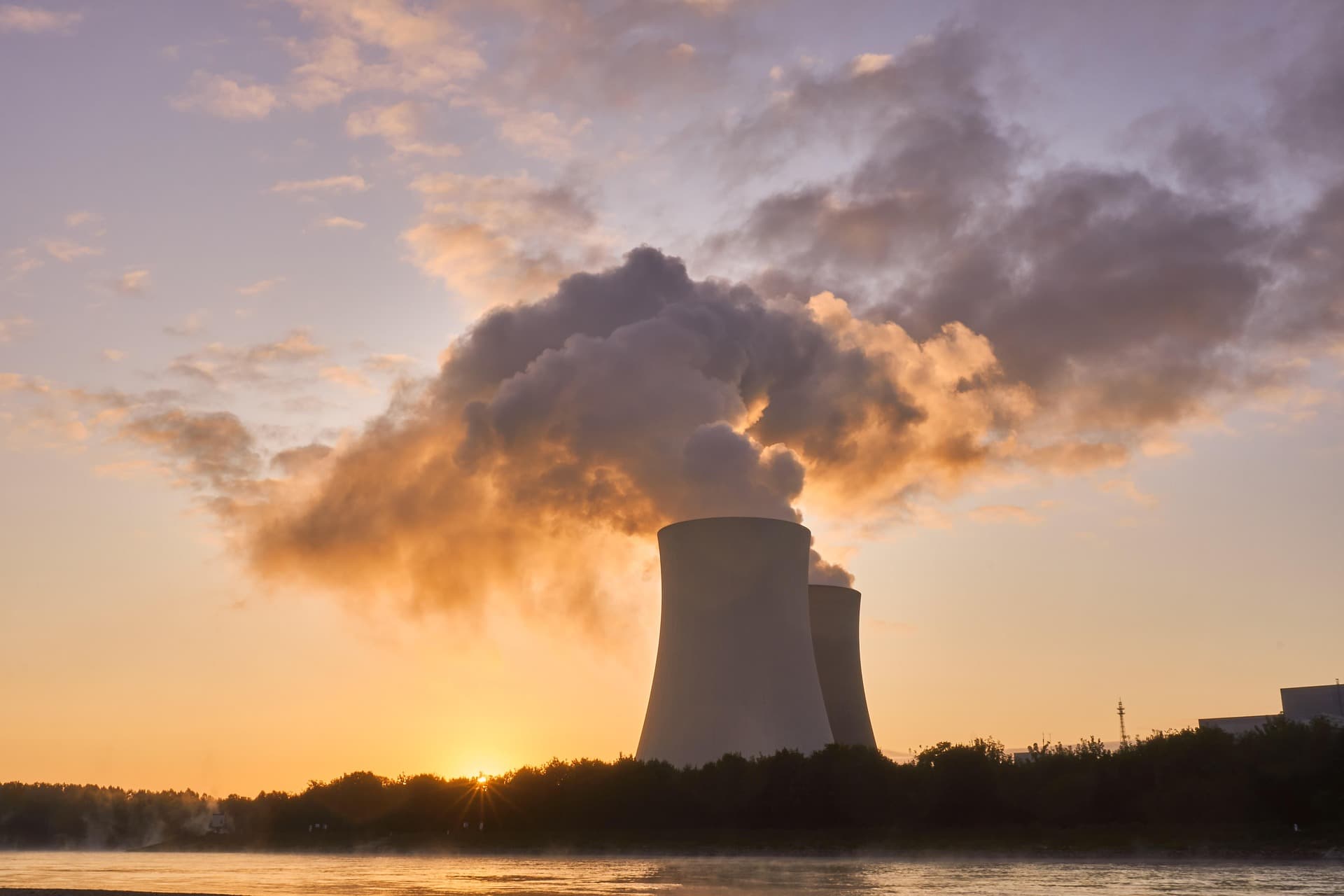
Nuclear Energy's Second Act
For most of the past two decades, nuclear energy was treated as a stranded asset class — politically toxic, economically challenged by cheap natural gas, and perceived as legacy infrastructure from a prior industrial era. That narrative has reversed decisively. The combination of AI data center power demand, decarbonization mandates, and geopolitical supply chain concerns has placed nuclear energy at the center of energy policy in a way not seen since the 1970s.
The AI data center buildout is the most immediate driver. Hyperscalers and large technology companies have made net-zero commitments that are incompatible with relying primarily on fossil fuels for their expanding power requirements. Nuclear power — with its 24/7 baseload characteristics, zero direct emissions profile, and extremely high energy density — is the only non-fossil source capable of providing the scale of always-on power that data center operations require. Microsoft's landmark 20-year power purchase agreement with Constellation Energy for the restart of Three Mile Island is not an anomaly; it is the first visible signal of a procurement trend that will define energy contracting for data center operators through the 2030s.
Energy Fuels' Domestic Production Advantage
Energy Fuels Inc. (UUUU) is the primary domestic uranium producer in the United States, operating conventional uranium mining and milling operations that represent the largest installed production capacity among US-based uranium companies. In an environment where the US government has enacted restrictions on Russian uranium imports and is actively pursuing domestic nuclear fuel supply chain security, Energy Fuels' US-based production is not merely a competitive advantage — it is a structural necessity.
The domestic production angle matters for a reason that is specific to nuclear fuel: unlike most commodities, uranium enrichment and fuel fabrication require regulatory approvals and supply chain certifications that make sourcing switches difficult and time-consuming. Utilities operating US reactors have strong incentives to secure long-term contracts with US-based suppliers that cannot be subject to foreign policy disruption. Energy Fuels is one of the very few companies capable of fulfilling that requirement at scale.
Rare Earth Optionality: The Secondary Thesis
What distinguishes UUUU from other uranium producers is its rare earth processing capability — a strategic asset that transforms the company from a single-commodity producer into a critical minerals platform. Energy Fuels has developed the capability to process monazite sands, a naturally occurring mineral that contains both uranium and a suite of rare earth elements including neodymium, praseodymium, and dysprosium — the specific rare earths required for the permanent magnets used in EV motors, wind turbines, and defense systems.
This rare earth processing capability is not theoretical. Energy Fuels has a functioning rare earth separation circuit at its White Mesa Mill in Utah — the only operating conventional uranium mill in the United States. The company is actively processing monazite sands from mineral sands operations in Georgia, producing separated rare earth carbonate as an intermediate product on a path toward separated rare earth oxides.
The strategic value of this capability is significant. The United States currently has near-zero domestic rare earth separation and processing capability, with the supply chain dominated by Chinese processors. Energy Fuels represents a potential solution to a supply chain vulnerability that the US government has identified as a national security priority. Policy support — in the form of purchase agreements, grants, or loan facilities — is a meaningful potential catalyst for the rare earth business that the current market valuation does not fully reflect.
Uranium Price Cycle and Contract Dynamics
The uranium spot price has recovered materially from the post-Fukushima trough and is now at levels that support new mine development economics. Long-term contract prices — the more relevant metric for producers given that most uranium trades in utility offtake agreements rather than spot markets — have moved similarly, reflecting utility procurement urgency driven by reactor license extensions and new reactor construction globally.
Energy Fuels is positioned to benefit from continued contract price escalation as utilities facing regulatory pressure to diversify away from Russian and Kazakh supply seek domestic alternatives. The company's White Mesa Mill provides toll-milling services for third-party uranium ore in addition to its own mining operations, adding revenue leverage without proportional capital commitment.
GZC Thesis Summary
We track Energy Fuels as a high-conviction position in the Commodities pool at the intersection of two structural themes: the nuclear energy renaissance driven by AI data center power demand and decarbonization mandates, and the critical minerals onshoring imperative that makes US-based rare earth processing capacity a national priority. The combination of domestic uranium production, rare earth optionality, and policy tailwinds creates a thesis that is structurally supported regardless of which specific nuclear reactor projects advance fastest.