The Framing Problem
Equity market attention in the AI infrastructure buildout has concentrated on the GPU. NVIDIA's stock price, semiconductor supply chains, and accelerator architecture debates dominate the coverage. This framing is understandable — the GPU is the visible, comprehensible bottleneck. It is also incomplete.
The GPU is the most discussed constraint on AI infrastructure deployment. It is not the most limiting one.
The most limiting constraint, in terms of actual deployment timelines for large-scale AI clusters, is the power delivery stack — the layered hierarchy of electrical infrastructure that must be engineered, permitted, procured, and installed before a single GPU in a data center can operate at commercial scale.
The Power Stack: A Hierarchy
AI data centers do not plug into the wall. They require a complete electrical infrastructure stack from the transmission grid down to the server rack. Understanding this hierarchy is the foundation of BTT analysis for AI power infrastructure.
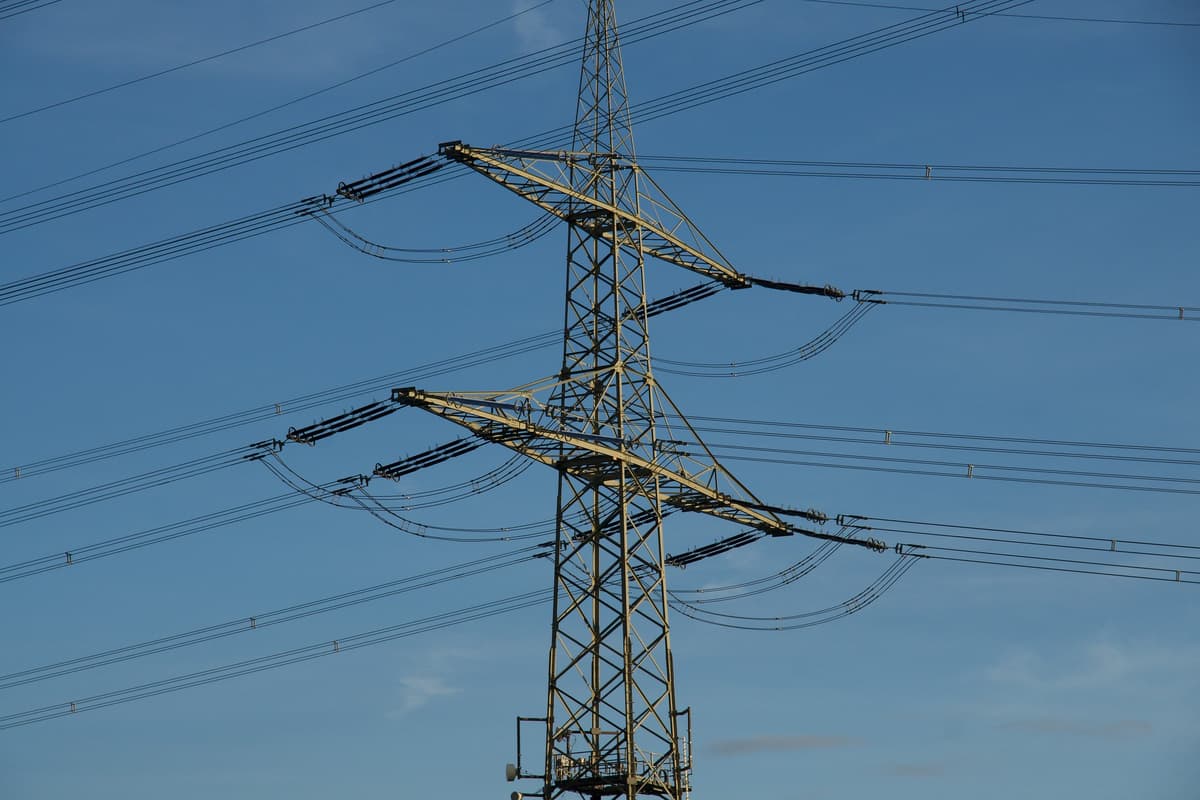
Layer 1 — Transmission and Interconnect: Large AI data centers, particularly those exceeding 50 megawatts of continuous load, require direct interconnection with the high-voltage transmission grid. This is not a distribution-level connection — it requires high-voltage lines, transmission substations, and in many cases, new transmission infrastructure that must be permitted and constructed.
Layer 2 — The Substation: The transmission substation is where high-voltage transmission power is stepped down for use in the facility. This requires large power transformers — the multi-hundred ton units that represent one of the most constrained components in the entire stack. Lead times for large power transformers have extended to two to four years in many markets, driven by simultaneous demand from utilities and data center developers.
Layer 3 — Medium-Voltage Distribution: Within the data center campus, medium-voltage switchgear distributes power to individual buildings and pods. Switchgear, like transformers, is a physical component manufactured by a small number of specialized companies with limited new capacity.
Layer 4 — UPS and Power Conditioning: Uninterruptible power supply systems ensure that compute equipment is protected from grid fluctuations. For GPU clusters training large AI models, even brief power interruptions can destroy in-progress computation and damage hardware.
Layer 5 — Power Distribution Units: Within the data center row, PDUs distribute power to individual server racks. As GPU power density increases — with modern AI accelerators drawing 700 watts to over 1,000 watts per card — PDUs must be redesigned and upgraded to handle loads that were not anticipated when many data centers were built.
Layer 6 — Rack-Level Power: At the rack level, the GPU receives its power through bus bars, cables, and connectors that must be matched to the precise power delivery requirements of the accelerator hardware. As GPU power requirements increase, rack-level power architecture becomes a non-trivial engineering challenge.
Where the Timeline Constraint Actually Lives
When a hyperscaler or data center developer announces a large AI campus, the public narrative focuses on land acquisition, building permits, and GPU procurement. These are real constraints. But the timeline-defining constraint is typically found in Layers 1 through 3.
A data center developer can accelerate building construction by throwing capital and crews at it. GPU procurement can be accelerated by advance purchase agreements with manufacturers. But the substation transformer — the large power transformer that sits at the interconnect between the grid and the campus — cannot be accelerated by capital alone. It can only be procured at the pace the manufacturing supply chain allows.
When procurement lead times for large power transformers are two to four years, a data center campus that is otherwise fully funded, permitted, and ready to build is nonetheless constrained by this single component. This is a textbook BTT bottleneck: non-discretionary demand, limited supply, long procurement timeline, and a manufacturing base that cannot be rapidly expanded.
The Investable Implication
Applying the BTT framework to the power stack hierarchy identifies several categories of investable exposure across the constraint points:
Transformer and switchgear manufacturers: Companies with established transformer manufacturing operations — particularly those with domestic manufacturing presence in the United States — are in a structurally favorable position. Multi-year backlog, pricing power, and procurement relationships with both utilities and data center developers create a durable revenue environment.
Power management and thermal systems: Companies providing UPS systems, power conditioning equipment, and thermal management infrastructure for high-density compute environments are positioned at Layer 4 and 5 of the stack. As GPU power density increases, the engineering requirements for this equipment intensify, creating meaningful opportunities for specialists with the technical capability to serve the market.
Grid infrastructure equipment: The broader grid modernization investment cycle — driven by federal infrastructure legislation, utility spending programs, and data center load growth — creates demand for an extended range of electrical components beyond transformers. Substation automation, protective relays, and grid monitoring systems represent additional BTT-identified positions in this part of the investment thesis.
What We Watch
The key indicators for the power stack bottleneck thesis are procurement lead times for large power transformers, utility capital expenditure planning cycles, and hyperscaler site announcement-to-energization timelines. When procurement lead times normalize — signaling that supply is catching up to demand — we will reduce exposure to the most supply-constrained positions and reallocate to the next emerging bottleneck.
The power stack is where AI infrastructure buildout timelines are actually determined. Understanding it at the component level, not just the macro narrative level, is the prerequisite for positioning correctly in the companies that will capture the most durable forced-spend in this cycle.